

Cabinet Door Hinge Types Explained

Replacing your cabinet doors? Don't forget to replace the hinges, too.
Cabinet hinges aren't always visible in the kitchen, but they play an important role in a door's function and appearance.
At Cabinet Door Factory, we specialize in custom-made cabinet doors and drawer fronts. In addition to our range of cabinet door styles, we also offer high-end cabinet hardware and hinges at affordable prices. If you're updating your existing cabinets, we can also help you find replacement cabinet doors that work with your cabinet construction and hardware. Choosing compatible doors and hinges helps ensure everything fits and operates properly.
In this guide, we'll walk you through the different types of cabinet door hinges available for your home renovation project. Here's everything you need to know:
What Are the Different Types of Cabinet Door Hinges?
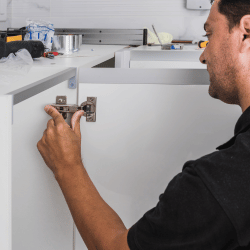
Cabinet hinges vary based on how they're installed, whether they're visible when the door is closed, and the cabinet construction they're designed to fit. When exploring different hinges, there are four different types you should know before investing:
Concealed Cabinet Door Hinges
Concealed hinges are completely hidden when the cabinet doors are closed. With this option, you don't need to worry about the hardware disrupting your interior design. It's a popular choice for modern, minimalist interiors and works well in kitchens and bathrooms. Concealed cabinet door hinges are also available with soft-close integrations. Many concealed hinges also offer adjustments that help you align the doors and maintain even gaps between them.
European Cabinet Hinges
European cabinet hinges are similar to traditional concealed hinges, but are commonly used with frameless cabinetry. These hinges have a cup-style design with a bore hole. This makes the hinge significantly easier to adjust. If there's any misalignment or an uneven gap, you can adjust vertically, laterally, or in depth without removing the door. Their concealed design pairs well with modern interiors.
Surface Mount and Butt Hinges
Surface mount and butt hinges are visible on the outside of the cabinet door. This is a common hinge style, commonly used in more traditional kitchen designs. Butt hinges are often used for inset cabinet doors, while decorative surface-mount hinges can add a finishing touch to traditional or custom cabinetry. The right option depends on how the door fits within or over the cabinet opening.
Specialty Cabinet Door Hinges
Beyond traditional cabinet door hinge types, specialty styles are used in certain applications. Some common options you might see include:
- Pivot hinges: Designed to keep the door on a single axis so it can swing back and forth. It's a popular choice for oversized storage cabinets and pantries.
- Corner cabinet hinges: These hinges are made for cabinets installed in the corner. They allow the door to open at different angles.
- Heavy-duty hinges: Heavy-duty hinges are typically needed for larger cabinet doors or commercial kitchens. These hinges are designed to offer more stability in heavy-use areas.
- Soft-close hinge: Soft-close hinges are a popular choice for kitchens and bathrooms. They reduce the risk of slamming and protect the door's integrity.
How to Choose the Right Cabinet Door Hinges
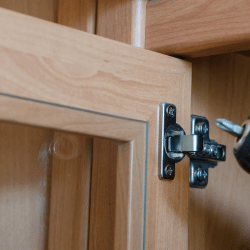
Now that you know the different types of cabinet door hinges, it's time to narrow down your choices based on your specific needs. Here's how:
Cabinet Style
When exploring different cabinet door hinge types, start with your interior design and functional needs. For example, if you have a more traditional interior design, you may prefer surface-mount hinges over concealed hinges. If you have a modern aesthetic, a concealed hinge will likely complement it better.
Cabinet Door Overlay
Hinges aren't universal and must match the specific positioning of your cabinet door and overlay. Here's how the overlays compare:
- Full Overlay: The most common hinge for a full overlay is a concealed hinge or a European hinge. These hinges reduce the gap between the door and the frame, creating a more seamless look.
- ½” Overlay: Concealed hinges or surface-mount hinges work with a ½” overlay. Surface-mount hinges work best for face-frame cabinets with a ½” overlay.
- Inset Doors: Concealed hinges or butt hinges work well with inset doors. Concealed hinges work better for modern interiors, while butt hinges work better for a traditional aesthetic.
Face-Frame vs. Frameless
Face-frame cabinet doors attach directly to the frame on the cabinet box. Traditional and concealed hinges can both work well with face frames. If you have frameless cabinets, there is no front frame, and the hinge attaches directly to the cabinet side. European hinges work best in this scenario.
Door Weight and Size
Make sure the hinge can support the weight and size of the cabinet doors. Taller doors and solid wood cabinets typically require more reinforcement. The Cabinet Door Factory team can offer recommendations based on your cabinet door size.
Standard vs. Soft-Close Hinges
Once you choose a hinge type, decide whether to add soft-close integration. If you have a tight budget, standard hinges are a more affordable, easy-to-install, low-maintenance option. They're a great option for low-traffic cabinets that don't open and close as often.
However, soft-close hinges are usually recommended for high-traffic kitchens and bathrooms. The soft-close mechanism will protect your cabinet doors from unwanted wear and tear. It also reduces slamming, helping you maintain a peaceful environment.
Replacing your cabinet doors is also a good time to consider upgrading the hinges. If your current hinges are worn, difficult to adjust, or don't offer the features you want, replacing them during the same project can help you get more out of your cabinet refresh.
Tips for Installing Cabinet Door Hinges

Replacement cabinet doors need compatible hinges to fit and operate properly. Before ordering your new doors, take a closer look at your existing cabinets and hardware. Here's what to confirm:
- Current hinge style: Identify the hinges you already have and decide whether you'll reuse them or install new ones.
- Cabinet measurements: Measure each cabinet opening and existing door carefully. Confirm the required replacement door dimensions before ordering.
- Door overlay: Check how far the doors overlap the cabinet frame or sides, or whether they sit inside the opening.
- Cabinet construction: Determine whether your cabinets have a face frame or a frameless design.
Measure Hinge Placement Carefully
Before drilling or attaching hardware, check the hinge manufacturer's instructions for placement and any required bore holes. If you're reusing existing hinges, confirm that the new doors can accommodate their mounting requirements. Accurate placement helps prevent uneven gaps and doors that rub against the cabinet.
Use the Correct Hinge for Your Cabinet Type
Choose hinges designed for your cabinet construction, door overlay, and door size. Hinges that look similar may have different mounting requirements, so check compatibility before installing them. Use the manufacturer's guidance to determine how many hinges each door needs.
Adjust Hinges After Installation
Once the doors are attached, make any adjustments your hinges allow to level the doors and create consistent gaps. Many European concealed hinges let you adjust the door vertically, laterally, and in depth. Make small adjustments and check the fit as you go.
Check Door Alignment and Operation
Open and close each door to make sure it moves smoothly without rubbing against nearby doors or the cabinet frame. Check that the doors sit evenly when closed and that any soft-close features work properly. Follow the manufacturer's instructions when tightening screws or making final adjustments.
Upgrade Your Cabinets With the Right Doors and Hinges
If you need help deciding which cabinet door hinge type is right for you, we're here to help. Our team will offer expert recommendations based on your cabinet door style, overlay, and door construction. Understanding your hinge options can make planning your cabinet upgrade easier. With compatible replacement doors and hardware, you can create a finished look that works smoothly for everyday use.
Contact us today to learn more.
Frequently Asked Questions
How do I tell what type of cabinet hinge I have?
To identify the type of cabinet hinge you currently have, first check whether the hinge is visible. If it's visible, you likely have a butt hinge or surface-mount hinge. If the hinge is concealed, it's likely a concealed or European concealed hinge. The distinct difference between concealed vs. European hinges is that the latter has a circular metal cup.
How do I figure out what type of hinge I need?
Identify your cabinet door style, construction, and overlay. This will help you narrow down your options and find a style that complements the cabinet doors you already have. From there, decide if you want to install a standard or a soft-close hinge. Soft-close hinges protect your doors, reduce noise, and create a safer environment for children.
Are most cabinet hinges universal?
No, cabinet hinges aren't universal. You'll need to match the hinge with your cabinet door style, construction, and overlay.
Which hinge type is the most commonly used hinge?
A butt hinge is the most commonly used hinge for traditional cabinet doors, while concealed hinges are a more popular choice for modern aesthetics.
